So here is the situation.
I needed ₹1,08,000. Not for anything exciting. Just one of those weeks where life sends you a bill and waits patiently at the door while you figure out where the money is coming from.
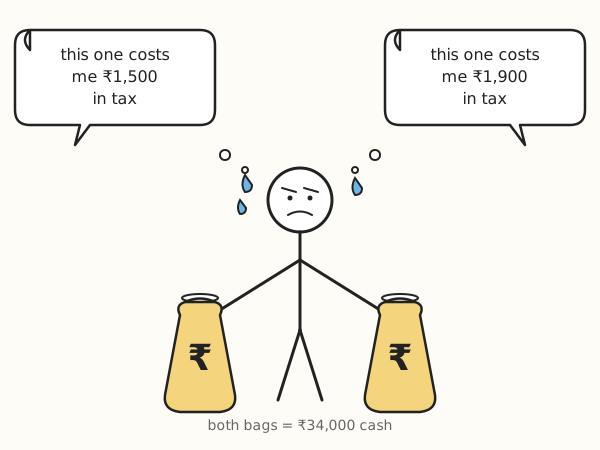
I had ETFs. A bunch of them. Some gold, some liquid, sitting there quietly compounding while I ignored them. Two of them were small and easy decisions. Sell completely, move on. But that still left a gap of about ₹34,000.
And here is where I got stuck.
I had two gold ETFs. GOLDBEES and HDFCGOLD. Both track the same thing. The price of gold. So in my head this was a coin flip. Sell some of one, sell some of the other, who cares, gold is gold.
I asked Claude.
The thing I did not know
Claude did the math and said sell GOLDBEES. I said why. Both are gold. Same underlying. Selling either one gives me the same ₹34,000 in my bank account.
And then Claude explained the thing.
The gain per rupee sold is different.
Wait what.
Here is what was happening. My GOLDBEES had grown 47 percent. My HDFCGOLD had grown 79 percent. Both winners. But for every rupee I sold of HDFCGOLD, a bigger chunk of that rupee was profit. And profit is what gets taxed.
Same cash in my hand. Different tax bill.
The rule, generalized
If you have multiple lots of something and you need to sell some of it, sell the lot with the lowest gain percentage first.
That is it. That is the post.
You still pay tax. You still realize a gain. But you realize less of it right now, which means the government takes a smaller bite right now, which means more of your money keeps doing the thing money does when you leave it alone.
The winner that has run up the most is the one you want to keep, not because of vibes or because winners keep winning, but because selling it is the most expensive way to get cash out.
Why I did not figure this out myself
Because I was not looking for it.
I was looking for “which ETF should I sell” and my brain answered “doesn’t matter, same asset.” Which is technically correct from a portfolio standpoint and completely wrong from a tax standpoint. These are two different questions hiding inside one decision and I only noticed one of them.
This is what I think AI is quietly good at. Not the dramatic stuff. The mundane “wait, are you sure you are asking the right question” stuff. The stuff a smart friend would notice if you happened to have a smart friend on speed dial at 10pm on a Sunday who also knew Indian capital gains rules.
I do not. But I have Claude. So.
What I am taking away
- Same asset, different lots, different tax outcomes. Sell the lot with the lowest gain percent.
- Short term capital gains is your slab rate. Long term is 12.5 percent flat. If a lot is close to crossing one year, maybe wait.
- “It does not matter” is almost never true. It usually means “I have not looked closely enough yet.”
Saved myself about ₹500 on this one. Not life changing. But it was sitting right there and I would have walked past it.
Next time I need cash, I will know.